

In short
An unanswered prayer for healing or deliverance does not mean a lack of faith or divine unwillingness. The real miracle is often not that a problem or physical pain disappears, but that you get the strength and insight to stand firm in it and move forward. Commandments and setbacks are not there to filter us out, but to shape us and guide us toward who we can become.
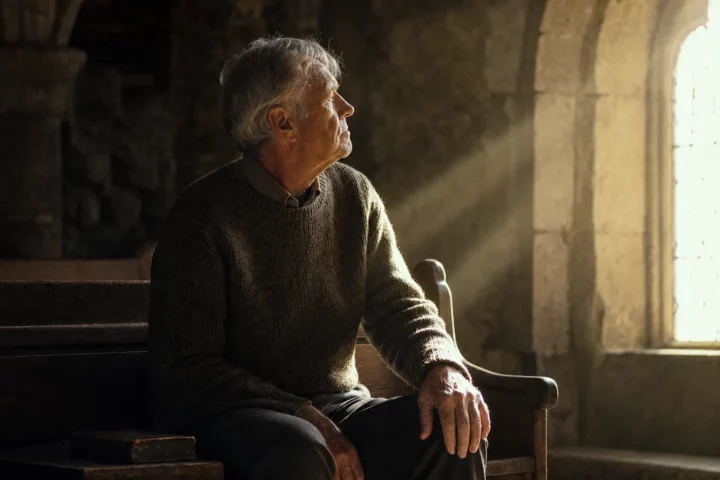
I am often in pain, every single day, for years. There was a time when I asked God to take it away. I baptized, I blessed, I served as a bishop, and meanwhile I prayed: take this away. It has not been taken away. And yet I still serve. That realization only came later: the miracle was not that the pain disappeared. The miracle was that, despite the pain, I was able to go on.
Many people reach a point in their faith where they become disappointed. They know that Christ can heal everything. They know that nothing is impossible for God. And then they pray to take away something very concrete — an illness, a mental struggle, a problem that consumes their lives — and it does not happen. The question that follows is not unfair: if it is possible, why doesn't it happen?
An easy answer that should not be easy
The easiest answer is: our life is meant for learning, and if every challenge is simply taken away, we learn nothing. There is truth in that — scripture itself says in the Book of Mormon that there must be opposition in all things, because otherwise no growth is possible (2 Nephi 2:11). But if you just leave that answer as it is, a problem arises: namely, every outcome can then serve as proof. Is someone healed? Miracle. Is someone not healed? Also good, because growth. In that way, nothing proves anything, and you must notsweep it under the rug if you want to write honestly about this.
Perhaps that is why we should be careful about explaining why God does or does not take away a certain burden. Some difficulties shape us. Others seem mainly to exhaust, break, or crush a person. And when someone is crushed, the intention is not to quickly look for a ‘lesson’, but simply to stand beside them. We cannot always see the distinction between what shapes and what breaks — certainly not from the life of another.
The distinction that I believe does hold up is not about sin versus the rest. It is about what blocks and what grows. The core is that Christ can heal everything that truly blocks us on our way back to our Heavenly Father — that is precisely His healing power. Sin is the clearest example of this: it is never growth material itself, it always blocks, and therefore that blockade had to be completely removed. Not changed, not delayed — removed. That is what the Atonement does: the demands of justice aresatisfied so that mercy can claim us (Alma 42).
But that healing power does not stop at sin. An illness, a loss, or a setback can just as easily be a pure blockade — something that consumes us so much that there is no room left to grow or to repent. Christ can also take that away, just as he did with the blind and the paralyzed in Scripture. The difference is not in what kind of problem it is, but in the question of whether it is a burden that shapes us, or a burden that crushes us. Therefore, praying for healing remains meaningful, even when the answer is not what you expected.
Not a sieve, but a tool
Christ and our Heavenly Father are one in purpose (John 5:19), and that purpose is not to sift us. In the book of Moses it is stated as directly as possible: God's work and glory is to bring to pass the immortality and eternal life of man (Moses 1:39). Not of the best among us. Of man. With God all are alike; he denies none that come unto him (2 Nephi 26:33). That is a God of inclusion, not of exclusion.
You might then ask: why then do commandments, barriers, requirements exist? Because a commandment is not a lock on the door — it is the explanation of how to get through. A commandment does not exclude anyone; it describes the way in.
What a miracle actually is
Back to the daily miracles, the miracles that are not the atonement itself, but do flow from it. I think we often miss them because we look in the wrong place. We expect the problem to disappear. Often, the problem changes in nature instead, or a path becomes visible that was not there before.
Look at the prophet Joseph Smith, imprisoned in Liberty Jail, while his people are being driven out and he can do nothing. No miracle frees him at that moment. Instead comes the promise that all things that happen to him shall give him experience and shall be for his good (Doctrine and Covenants 122:7). The suffering is not taken away. It is given a place.
And look at what it says in the book of Ether: our weaknesses are given to us to humble us, and when we turn to God, weak things become strong for us (Ether 12:27). It is the exact parallel of what the apostle Paul experienced when he prayed to have his “thorn in the flesh” removed and was told that God's power is made perfect in weakness. Not: the weakness disappears. Well: weakness becomes the place where strength becomes visible.
That is, I think, what happened to me. Not that my pain disappeared. But that, in and despite that pain, I can do what is necessary. If anyone is struggling right now with a prayer that doesn't seem to be answered, I don't want to pretend that it doesn't hurt. It hurts. This reframing doesn't take away that pain — it just gives it a different place.
Being blind to the solution that is already there
Scripture is full of stories of the blind who can see and the paralyzed who can walk. We often read them as medical miracles from a distant past and nothing more. But look at the paralyzed man who was lowered through the roof to Jesus. Jesus first says: your sins are forgiven — and only then: rise and walk (Mark 2:1-12). The physical healing is the sign. The real healing had already happened before, on the inside.
Perhaps we should apply that to ourselves. Not as a medical miracle, but as something that points to our own blindness. We often do not see the solution that is already there, precisely because we are looking at something else. Someone with financial difficulties often sees only one solution: more money. And perhaps that is also a real need. But sometimes the opening lies elsewhere — in a choice you had not yet considered, a path that opens up as soon as you dare to look. That is not a reproach to those who are stuck. It is an invitation to, just like the blind person in theScripture, to see something that at first did not seem to be there.
The goal of all this is not complicated: eternal happiness, and the way back to our Heavenly Father. If you look at your own life from that perspective, something changes. Not every miracle looks like you expected. Sometimes it is just that.
Where in your life could the answer to a prayer look different than you expected?
Discover more from GeensZins
Subscribe to have the latest posts sent to your email.

[…] experience and think 'apparently my faith is not strong enough', I immediately set it straight: faith is not an instant healing, and Christ is not a kind of vending machine where you choose the outcome you […]