

Dear Jean-Marie,
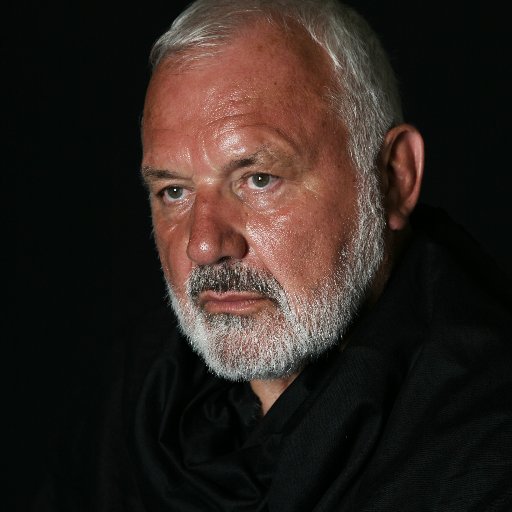 Forgive me for addressing you amicably, but after reading your book “Frank and free” I feel like I've gotten to know you better, as someone with whom I would gladly spend hours in a pub philosophizing and chatting, sometimes discussing nuances in our different opinions thoroughly, other times laughing out loud realizing we agree.
In that way, my opinion of you has fundamentally changed. In earlier times, I considered you a loudmouth – a 'roeptoeter' (blabbermouth/demagogue) in your jargon – and a troublemaker within the VLD, and I preferred you gone rather than present with the young N-VA. Only an idiot never changes their mind, and so my opinion of you has been thoroughly adjusted. I now realize that you are not a sports insider who borders on idiocy due to excessive use of doping and other mind-altering substances, but rather an erudite man from whom I would gladly receive friendly adviceabout which books are still missing from my reading list.
You have the gift of saying and writing what many people think but do not dare to suggest, so as not to be condemned by the environmental church or welfare cuddlers of leftist politically correct thinking. Above that, you have the intelligence not to do this thoughtlessly, but supported by solid material and seasoned with an unvarnished opinion. Your columns are a treat for a willing critical thinker, and for that, I thank you.
However, there are two recurring viewpoints of yours with which I disagree. Of which I even feel I must undertake a crusade to appeal to your own critical mindset to examine your own thinking using arguments you may not have considered yourself.
Both subjects are close to my heart, and in a vain attempt to give you enough food for thought, I want to limit myself to one topic per letter. After all, there are only so many counterarguments a person can swallow without their mind closing off to novelties, like a trade union for modern views.
Faith and backwardness do not always go hand in hand
The topic I want to address in this letter is your one-sided opinion on faith and religion. I fear you too easily limit this topic to two major currents with which you are familiar, namely Roman Catholicism and Islam. You are probably culturally shaped by the first, and the second is rammed down your throat by the tolerance media. I hope that after reading this letter, you will think for even one second that faith and backwardness do not always go hand in hand.
I want to show you that religion by no means has to contradict the Enlightenment. Some would dare to call such a thing a “modern religion,” but that again conflicts with the fact that a religion can perfectly adopt conservative standpoints without therefore sacrificing what the Enlightenment and science have given us.
For me, science and religion are two different views of one truth. It is often stated that where science resides, there is no longer room for religion. Fortunately, there are also scientists who claim the opposite. For example, consider the chemist Dr. Eyring, who has published more than 600 scientific articles and on whose work several Nobel Prize-winning studies were later based. The fact that Dr Eyring himself has not won a Nobel Prize says more about the Swedish committee that decides on this than about Dr Eyring himself. Either the Swedes of his time did not understand what he was doing or they were too narrow-minded as scientists to accept that a scientist could be deeply religious. Too bad, because if there is one quality that a scientist should have, it is an open mind that recognizes that there is still a lot we do not know.
Difference between religion and science?
The methods of religion and science do not always differ as much as is always claimed. Pseudo-scientists, a term I often give to people who consider themselves scientifically educated because they studied sciences during their secondary education, often come up with “prove to me that God exists” or “show me God”, but often forget that they themselves scored points with proofs by contradiction.
When I get such a question, I sometimes dare to refer to love as proof of God's existence. The pseudo-scientists then come up with counter-arguments that this is merely the result of chemical processes in our brains. That's precisely the beauty of faith. Multiple explanations are possible, but which one do you believe the most?
In science, it's often no different at its core. The Higgs boson itself has not been observed. According to the Methodus Scientifica of empirical science, a theory is tested by predicting consequences and then observing them. However, the empirical method does not exclude the possibility that a consequence can also be explained from a different model. Upon the discovery of the Higgs boson, you could read that the probability of a false observation was astronomically small, but not non-existent.
Often, however, (pseudo) scientists go into overdrive and apply a short-sighted method of discrediting religion, precisely what they rightly blamed religion for centuries. It's as if the pendulum has swung too far the other way and scientists en masse are now taking revenge for the years of persecution that drove them to obscure societies such as the Illuminati.
Are you surprised that I believe in both Darwinism and Intelligent Design? I believe that God is the great architect of this earth, but that science is still not able to fathom everything of His Creation and especially the way He brought it about. Could it be that this is a catch 22, that man is unable to fully understand and unravel himself because you usually have to be on a higher level to understand everything on the underlying levels? Or will we succeed one daybecause we are children of God? Could God perhaps be the über-scientist of all time?
You often call the Bible a fairy tale book, and I can understand you in that. The Bible is a record of stories that have come down to us through tradition. Just like in the time of analog cassettes, old-timers like you and I know that every copy can bring with it a degradation of quality. However, is the Bible to be ignored because it is not a scientific book? Does it not contain values that our society perhaps too easily dismisses nowadays?
Proof by contradiction
 What if we now accept the following reasoning from absurdity? What if we assume that there is a supreme being, so much more intelligent than us? A being capable of reasoning in so many dimensions simultaneously, more dimensions than we currently know of or even suspect exist? If such a being exists and he is willing to share his knowledge with us, shouldn't we then accept that he is obliged to use a whole lot of simplifications? Of imagery and examples, ofstreamlined models and theories that fit into our current brain? Just as we don't bore a toddler in kindergarten with integral calculations, but teach new theory every year, rule by rule, so too do we as humanity progress through the centuries in the science we gather.
If we could then accept that such a supreme being exists, is it then also wrong to think that we can communicate with him in a very rudimentary way (from his point of view)? That he answers our questions little by little? From that approach, is it not more acceptable that within a living religion one still receives new communication, new revelation, rather than believing that God spoke for centuries through prophets but has now been silent for 2000 years?
If such a God is also the architect of our world, is it then difficult to accept that we live in that world without fully understanding it? Every scientist will acknowledge that science is primarily defined by what we don't know rather than what we do know. No one questions the fact that scientists debate the theory of everything more fiercely among themselves than Sunnis and Shias differ in opinion about who may speak on behalf of Allah?
Please don't come now with the eternal platitude 'if there is a God, why is there so much suffering?'. Then I will likewise give the nuanced answer, 'which father controls every facet of his children's lives?'. To love also means to let go and accept that one will hit the wall with their face. To then try again to show that it can be different.
Actually, in the paragraphs above, I have explained quite a few articles of faith of Mormons. I myself have been searching for 20 years and have asked many of the questions I raise above. This religion is the first that has given me adequate answers, partly by starting with “we don’t know everything by far yet, but we do know the following…”. Is the doctrine of The Church of Jesus Christ of Latter-day Saints then so modern? In many respects it is conservative. We still believe that marriage is intended for one man anda woman. At the same time, however, we grant anyone who does not believe that, the same happiness. Is it then modern to claim the right to believe something yourself, but at the same time acknowledge that others may well believe something different? Is that perhaps the Enlightenment within religion that other movements lack?
Faith does not belong in a dark corner.
I understand your opposition (and that of many others). Firstly, there are centuries of dark history of religion. So many crimes have occurred in the name of God, that perhaps no name in the world is more stained by blood than that of God. And that history is not yet over. I do not want to judge other religions, but I also cannot deny that Islam carries something within it that makes it impossible for this religion to simply fit into our modern times and Enlightened society.
At the same time, however, I want to argue that faith should not take place purely in the darkness of our private thoughts. A religion that does not detract from what science and enlightenment have brought us as advantages deserves a place in our society. After all, it can't hurt to give some counterweight to science. Ethics should not only be in the hands of éminences grises like Etienne Vermeersch, whom I often suspect of being an atheist primarily due to his own disappointment as a failed priest. Indeed, I often see thatoften: the staunchest opponents of religion are often the deeply religious people from before. If this statement also applies to Islam, then that religion might still be able to appeal to people who can lift their fellow believers out of dark times.
Does religion belong in education? For me, it certainly doesn't have to. Those who are religious and want to pass this on to their children can better rely on themselves than on a government. I prefer to give my children the ethical values that I find important myself, rather than leaving this to a government that engages in mind control in this way. Again, as Mormons, we also take care of ourselves in that area. Without paid clergy, we organize Sunday school, seminary, and institute classes to give our young people enough baggage to form their ownopinion on their belief or non-belief.
I do give a warning. If religion is cornered, don't be surprised that in those dark nooks and crannies things happen that cannot even bear the light of day. Let religion happen in broad daylight, in full public view, with the same value for those who believe and those who do not believe. However, if religion from emotion is reviled, then the Enlightened minds deny themselves a part of the Enlightenment glorified by them. The word itself indicates that you should let light shine where darkness reigns, not that you simply have to move the lamp.
I therefore pray for you, dear Jean-Marie, that the Enlightenment may continue to shine for you and that with this letter I have shed some light on the fact that faith and a modern society can go hand in hand, albeit not the faith we know from our history books nor the faith that is currently being suffocated by our government while they just want us dead. But don't throw the baby out with the bathwater.
With friendly greetings,
David Geens
Discover more from GeensZins
Subscribe to have the latest posts sent to your email.

Oh my, your answer: what an epistle, though - you really put effort into it, but much too long in my opinion. One thing for JM, the devil exists - there is life after death - and there a supreme being reigns. It's just like with aliens, if you thought they existed, they put you in a madhouse. I say RELIGION is of the devil, believing in the afterlife is not. And rest assured, there you will be judged on your actions.
Oh my, your answer: what an epistle, though - you really put effort into it, but much too long in my opinion. One thing for JM, the devil exists - there is life after death - and there a supreme being reigns. It's just like with aliens, if you thought they existed, they put you in a madhouse. I say RELIGION is of the devil, believing in the afterlife is not. And rest assured, there you will be judged on your actions.