

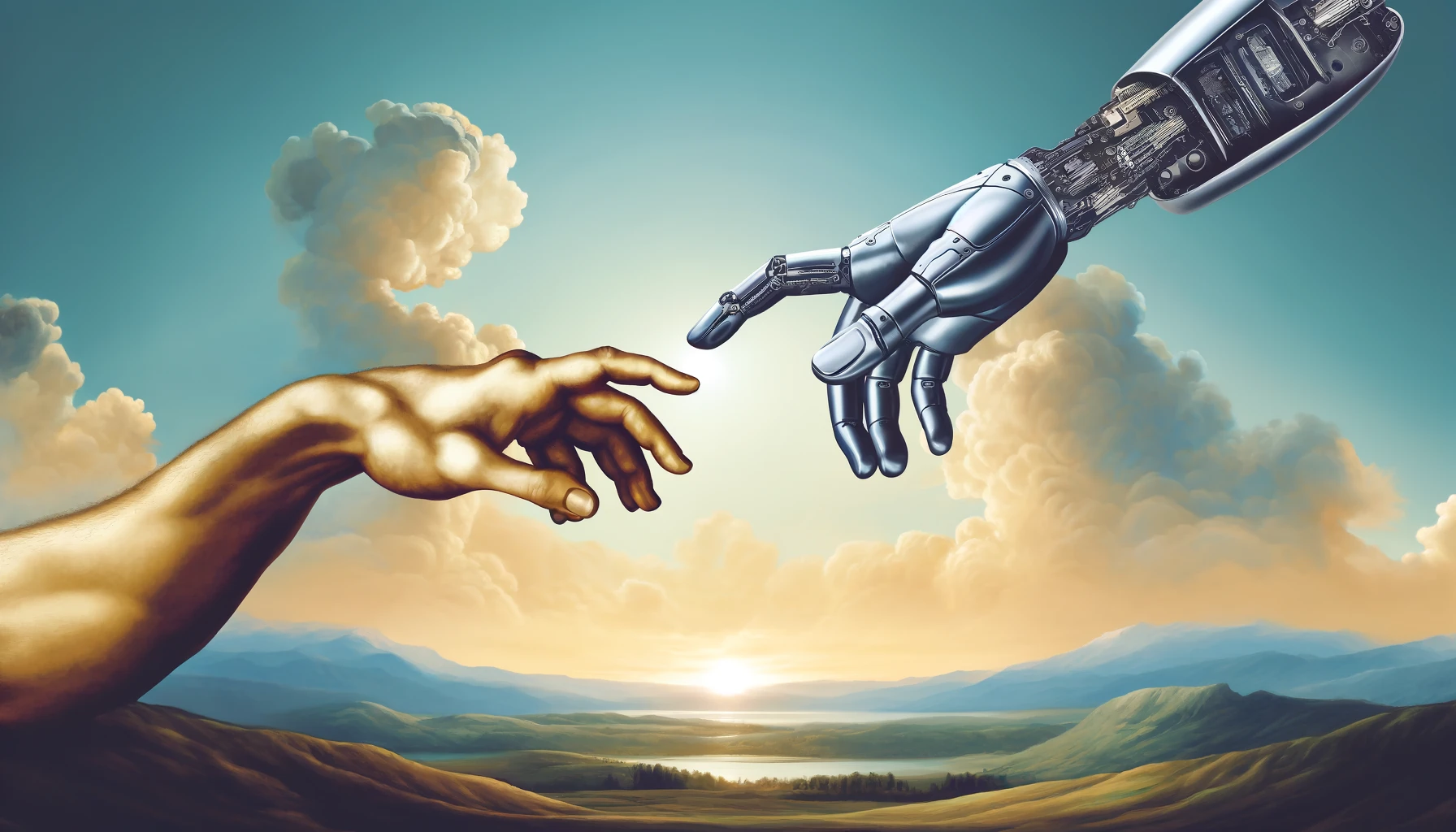
Recently, I had an engaging discussion with philosopher and scientist Gerard Bodifee and his wife Lucette Verboven about ethics and artificial intelligence (AI). Our conversations brought to light several intriguing issues, which I would like to share.
AI and ethics: a new era
Artificial intelligence is on the verge of a breakthrough where it will outperform humans in some areas. This means that AI systems, such as self-driving cars, will be able to cause fewer accidents per million kilometers driven than human drivers. However, the margin of error will never be zero. This raises an important ethical question: why do we have such a hard time with the idea that self-driving cars, despite their superior performance, will still cause accidents?
The human aspect of errors
From my conversations with Bodifee, it became clear that a fundamental human aspect is at play. When a human makes a mistake, we can hate or forgive that person. These emotional reactions are deeply rooted in our interactions with other people. But when a mistake is made by a soulless AI system, this possibility of forgiveness or hatred is absent. This makes it harder for us to accept such mistakes.
It seems that a large part of the ethical discussion around AI is about how we as humans react to errors. Can we find the same emotional space for forgiveness in technology as we can in people? This is a fascinating issue that forces us to reflect on our own behaviors and ethical standards.
Ethics and faith: inextricably linked
This discussion also made me think about how closely ethics is intertwined with faith. Being able to forgive someone or choosing to continue hating someone is a fundamental choice we have learned to make and distinguish thanks to the example of Jesus Christ. That is why I also think it is no coincidence that we find that interface with faith in this discussion about ethics.
For me, this is yet another proof that faith is truly part of who we are, of our identity. When we reflect on ethical issues, we automatically, sometimes without realizing or intending to, fall back on deeply religious matters for which we find answers in Christianity.
The divine path of creation
With the creation of AI, we clearly embark on a path where we ourselves will be able, or perhaps will be able, to create intelligence. We are slowly beginning to move on a divine path where we can create other intelligent beings. The question then is how much we should learn from our faith to determine the ethics concerning the paths we will further take in developing AI.
Can we learn a lot from the examples that faith offers us about how we should deal with the intelligence we create? It offers further insights and questions about where we will set boundaries: boundaries for ourselves, boundaries that allow us to intervene in what we create, but also freedoms that we will give to the beings we will create.
And then we have to ask ourselves: should we perhaps think about giving the new intelligence we create the predisposition to develop religion? These are fascinating questions that we certainly need to ponder.
Thinking about our future
I am curious about your thoughts and reactions on this topic. What do you think about the ethical implications of errors made by AI? And how do you see the role of faith in these discussions? How should we deal with the new intelligence that we might create?
Discover more from GeensZins
Subscribe to have the latest posts sent to your email.
