

Have you also seen the news this week that a food bank in Mechelen closes, because according to them, the poor are becoming too picky and even ungrateful? When I heard that, my first reaction was 'then you are not really poor and you don't need welfare work, otherwise you would accept it with open arms'. However, by thinking further about this problem, I am now ashamed of that initial reaction. There is much more to it.
First of all, I can actually understand the situation. If you look deeper into this story, you learn that this food bank (and many others) work with fixed packages. The volunteers determine what goes into the packages. In fact, a double filtering occurs: first, there is only what comes in to distribute, and second, someone else chooses what they think is good for you.
The poor are not ignorant wretches, but people with a right to self-determination and more than enough human dignity to be allowed to choose. I already hear some thinking “hunger is the best sauce”, but I would really have to be almost dead before you could make me eat beef tongue. And apart from that, is it really welfare work if we virtually ram foie-gras-wise down the throats of the poor what we think they should eat?
When I read the opinion piece by Bert D'hondt I disagreed with several parts of his argument, but fully agreed with the following:
Those who live in poverty are not surplus people. They are an integral part of our society and deserve the same rights and opportunities.
…
People in poverty who rely on food aid know their situation best. Therefore, involve them in the organization.
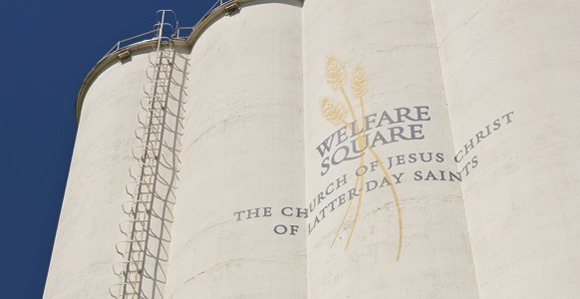 This reminded me of one of the most inspiring visits I made in Salt Lake City last year with my family: the Welfare Square of The Church of Jesus Christ of Latter-day Saints. Allow me to briefly outline what happens there.
Welfare work of the Mormons: self-reliance is central
The entire welfare work of the Mormon church revolves around one basic concept from Mormon doctrine: self-reliance. You and I once learned the saying 'give a poor man a fish and he eats for one day; teach him to fish and he can eat every day'. That is self-reliance.
 The Welfare Center is a place where people in need can go. For example, there is a food store – the bishop's storehouse. People in need can shop there for free. Not that they can just fill their shopping cart with whatever they want. Everyone first has a conversation with their bishop [footnote]A bishop is the local leader of a unit in the Mormon church, comparable to a pastor in his parish[/footnote]. Based on this conversation, they jointly determine what the needs are and the person in need receives a form,on which it is indicated which products are needed for this family.
This therefore happens in consultation with input from both sides. For example, a bishop can point out that sugary cornflakes can certainly be a breakfast for the children, but that more is needed to set up a healthy diet for the family. Conversely, it can also be noted that, for example, milk is not necessary because someone in the family has lactose intolerance.
But it goes further than that. The products in that store largely do not come from surpluses, but are produced by the church itself. The Church of Jesus Christ of Latter-day Saints itself has farms, orchards, fields, etc... These are operated by volunteers, young and older missionaries together as service in welfare work. But also together with those in need themselves. For example, it is investigated whether it is useful work experience for those in need. Perhaps he or she learns a job with which onecan later find employment in the private sector.
Welfare Square: example of modern welfare work
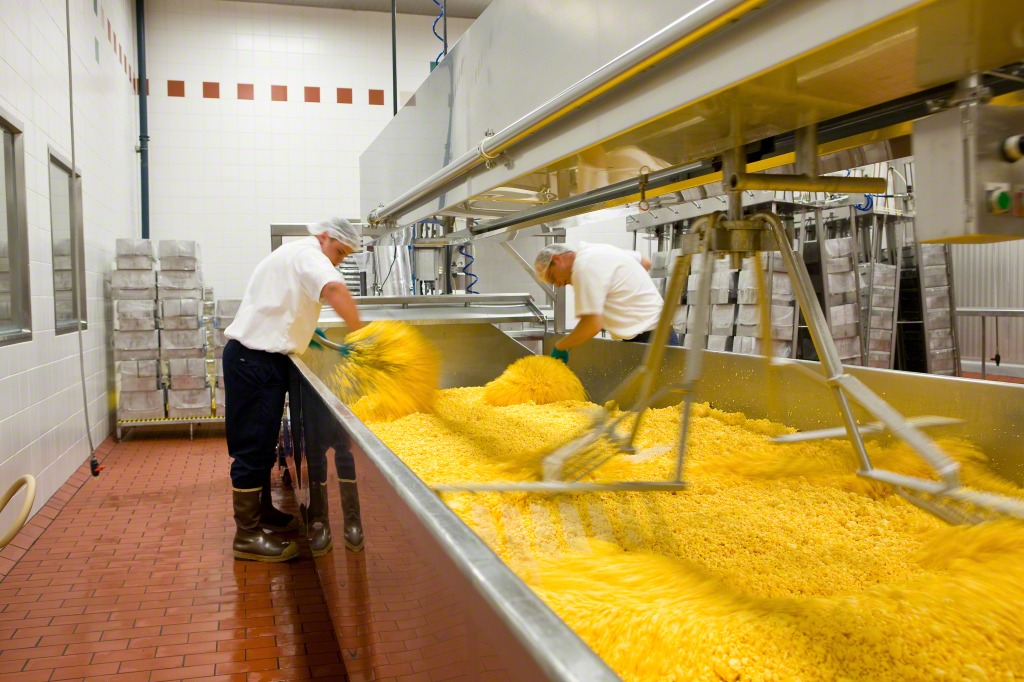 If you visit Welfare Square, then follow the tour which is offered free of charge. For example, you will see how cheese is made on site. Or bread is baked. All volunteer work, supplemented by people who also use the system and thus learn a job. Because that too is part of the church's welfare work: helping people to stand on their own two feet.
You will also find a job center at Welfare Square. A place where the VDAB (Flemish Public Employment Service) could also take a lesson. They not only help you find a job, but also work with you to find out what needs to happen to qualify for a job. I was overwhelmed when I saw someone sitting at a desk with the title first impressions director. So you can go to her and she gives feedback on what first impression you leave and how you can possibly improve it. There are also people, again volunteers, often people who have been employers for years before they retired, who advise you on your CV, train you in a job interview, etc...
 There is also a thrift store / recycling center. Everyone can bring used items there. Clothes, furniture, electronics, ... Often these items need some processing to be in perfect order again. A lick of paint, new buttons, a new power supply, ... You can already guess: volunteers teach those jobs to people who can use the experience and knowledge to find a real job afterwards. And the repaired items end up in the store where you can buy them again at truly ridiculously cheap prices.
Welfare work and self-reliance can be found everywhere
Of course, the church does much more welfare work than just there at Welfare Square, but there you will find a lot together and you will learn in an hour what welfare work should really aim for: teaching someone to stand on their own two feet and take control of their life again. That lesson is a wise lesson for everyone, both for those who give and for those who (temporarily) need help.
The principle of self-reliance as social work can happen in many ways. An example to illustrate this. I heard of someone from our church who had become unemployed because the garage where he worked as a technician went bankrupt. To help the family in the short term, the bishop decided to temporarily provide financial assistance for the rent and thus from the fast offering fund [footnote]Each member of the church is asked to fast one day a month and deposit the saved money into this fund[/footnote]. But also themembers sprang into action. In many families, a little extra was cooked to share meals, but the most beautiful thing, I thought, was that one of the members determined that the laid-off technician had a dream of starting his own repair shop to start with cars, but had no starting capital. It soon turned out that someone else in their neighborhood had an empty shed that couldn't be rented out because it was a crisis. The laid-off man was given access to that shed with the agreement that rent would be paid as soon as his business generated enough income. Other members all went to check their garden sheds to see if they had any unnecessary tools lying around or if they could perhaps buy a specific tool as a contribution. In short, in no time the repair shop was established from theground up and the man had his own income again and could, in turn, help others again.
In my opinion, welfare work should always be focused on what Bert D'hondt described as:
People in poverty deserve a full place in society, where they can take control of their own lives.
Ontdek meer van GeensZins
Subscribe to have the latest posts sent to your email.
