

Father Damien is a household name in our country. In 2005 he was still chosen as Greatest Belgian elected. Everyone in our primary schools receives a lesson about how this young priest went on a mission and eventually chose to serve among the outcasts of the world: the lepers of Kalaupapa, a secluded peninsula on the Hawaiian island of Molokai. But he was not the only religious person there. There were also Mormons on Molokai.
The Mormon experience in a lost community
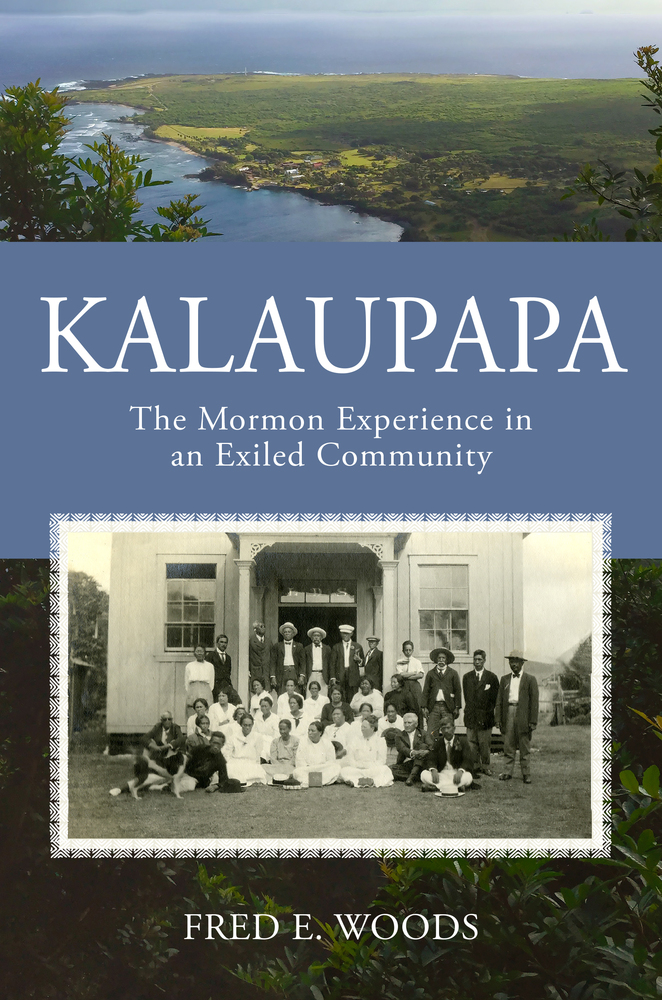 I have just read the book Kalaupapa: The Mormon Experience in an Exiled Community read and this book taught me a lot. To start with, about leprosy itself. I still had the childlike, biblical conviction that it caused body parts to fall off and that you would die very quickly. That, on the other hand, it is an infectious disease that can only affect a part of the population and that you can suffer from it for years before you die, was all new to me.
But the life of Father Damien has also gained new meaning for me. He knew very well what choice he was making. Moreover, due to the limited medical knowledge of that time, it was a clear choice to risk contracting the disease himself. His statement, however, was: 'if the disease affects my body, God will give me a new body at the resurrection'.
Damien was a true saint. He gave his life to care for others. He was more than a priest: he was a true shepherd. He did more than just celebrate mass. He did everything necessary to help others. And for him, religion was not relevant for that.
What I didn't know at all, was that there were also Mormons on Kalaupapa. Both among the patients and those who cared for them. Because apparently very often helpers went along with the patients who were banished to the island. Hawaiians find family so important that they never let them go. So the community often also included healthy residents.
So there was also a Mormon community. The book contains a thorough, academic overview of their presence in Kalaupapa and their service to the community there. This book is also a testimony of the ecumenical community on Molokai. For example, Father Damien had a very good friend who for a time was the spiritual leader of the Mormons.
Loving one another is the true message of Christ
If I learned one thing, it's why Kalaupapa has become such a sacred place. Where man had to face his most serious challenge, he learned not to look at himself anymore, but at the other. For example, there is the story of the reconstruction of the Mormon chapel. Everyone came to help. People who no longer had hands had their arms attached to the wheelbarrow to be able to bring in material. Afterwards, it turned out that more hours had been toiled by non-Mormons than by Mormons themselves.
Father Damien himself also set a good example. The book contains firsthand stories of Mormon missionaries who were always well received by Father Damien and allowed to stay with him overnight. Damien did this until he received a direct order from his bishop to stop this, and even then he obeyed with a heavy heart.
This book taught me a lot. Not only about the life of the Mormons there, but about the special atmosphere that prevailed in Kalaupapa. Christian love. Apparently, one must first lose all hope to find the truth.
Discover more of GeensZins
Subscribe to have the latest posts sent to your email.
