

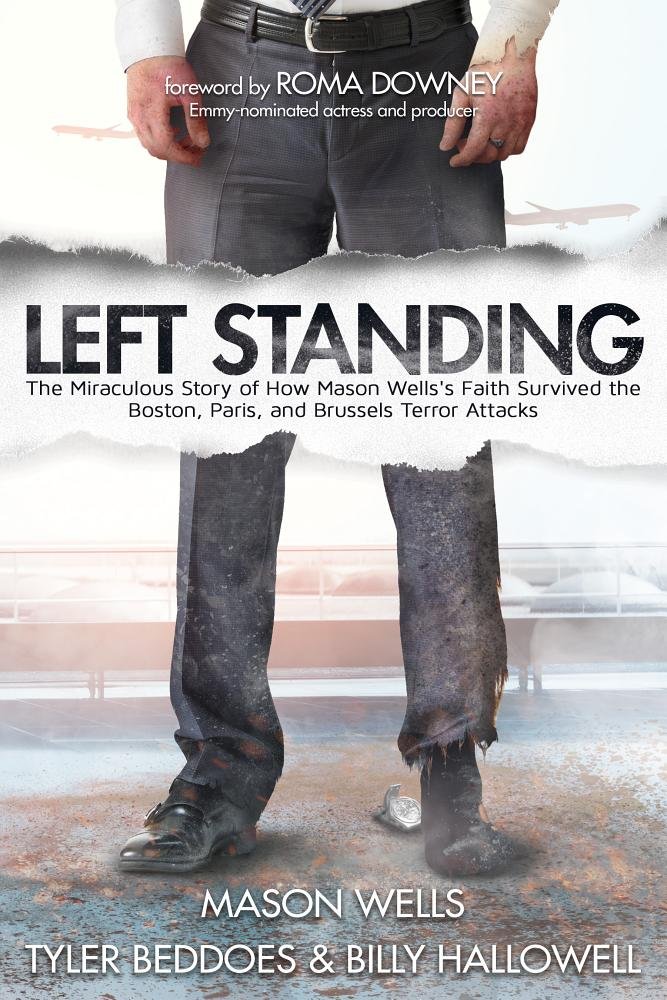
 March 22, 2016 – a bomb explodes at the Belgian national airport in Zaventem, quickly followed by another bomb. A few meters away from that bomb were some Mormon missionaries, ready to wave one of them goodbye on their way home. Mason Wells is one of them and in less than one second, the impact throws his watch off his wrist and his shoe off his foot. And this while he had already experienced terrorism earlier in his life. How do you survive something like that and how do you react afterwards as a Christian? Mason wrote a book about that: Left Standing.
The attack around the corner
In 2013, Mason Wells' mother, son of a Mormon family from Utah, decides to participate in the famous Boston Marathon. Mason is then fifteen years old and is allowed to go to Boston with his father to encourage his mother. They miss her halfway through the course and rush to the finish to cheer her on for the last meters.
At the finish, however, they realize they are too late and start looking for her in the crowd of people behind the finish line looking for a place to recover. They are only one street further when several loud bangs sound, the earth trembles, and windows shatter. After a few moments, they realize something is seriously wrong. Mason is sent to their hotel by his father and experiences a few anxious hours until his father informs him that he has found his wife.
All that time, Mason sees the chaos in the street from his hotel room window, but he also notices how people immediately commit themselves to helping victims. In the following months, he processes this event. For a fifteen-year-old boy, it's not always easy to realize that there are people who only want to harm others. Especially not if you come from a Mormon family that naturally focuses on the good in life.
On a mission
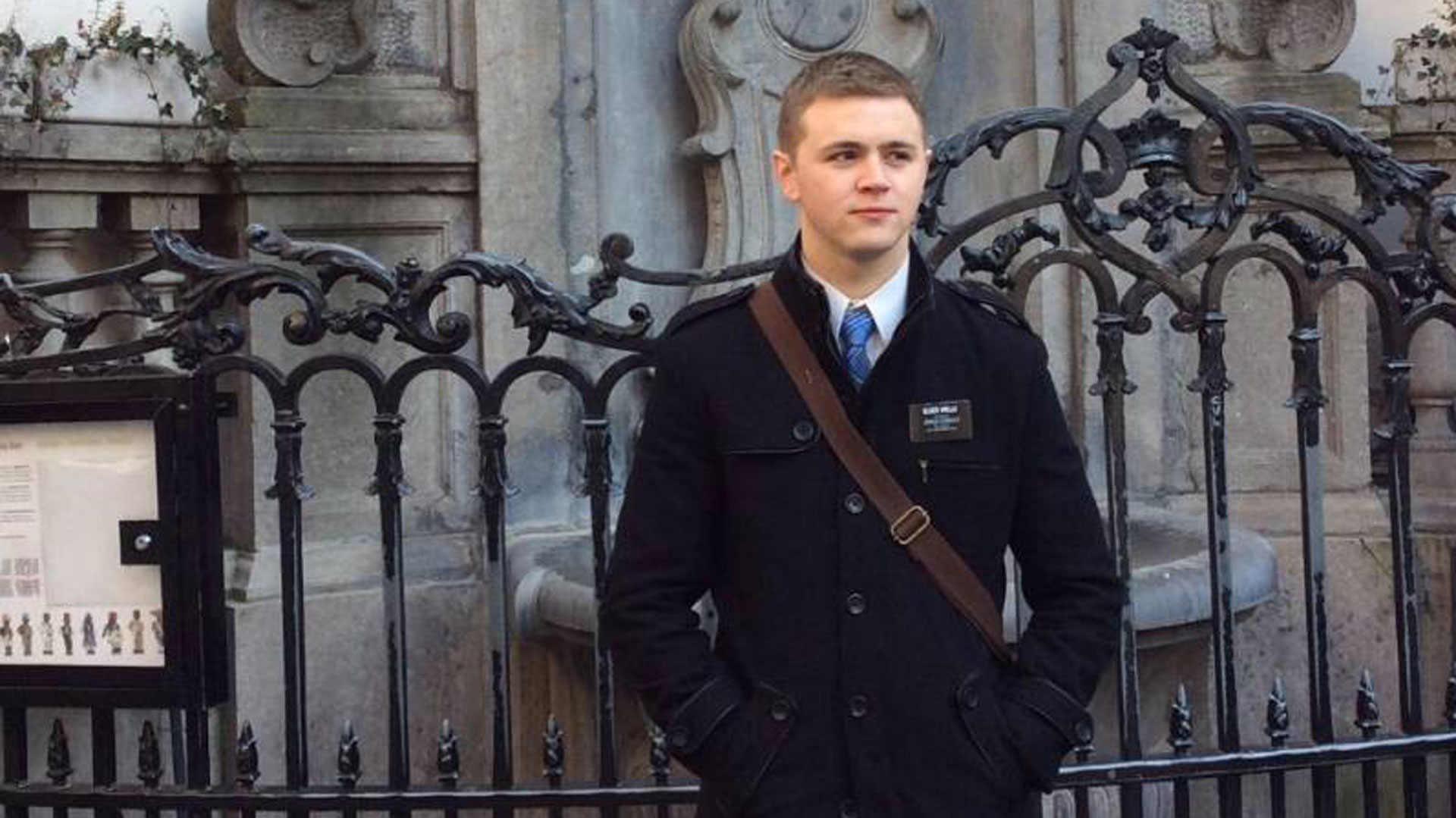 Mason's big dream is to join the navy. He studies and exercises as the best with only that goal in mind. He takes all tests but sees his dream shattered when he is not admitted to the US Naval Academy.
Nevertheless, he decides to dedicate himself to others and submits his application to become a missionary of The Church of Jesus Christ of Latter-day Saints. A few weeks later, the letter arrives appointing him as a missionary in the Paris France mission.
He has not been on his mission long when several attacks occur in Paris. Although he is not in Paris, given his previous experience with terrorism, he feels enormously involved because it happens in his mission area. These attacks may have occurred 100 km away from him, but in his heart, he is with the victims because he knows from his own experience how one feels in the chaos during the first hours after the attacks.
But Mason doesn't give up and continues to dedicate himself to the people in his mission. He has been on a mission in Brussels for some time when a sister from his mission area has to go to Zaventem to take a flight home. Mason is always willing to lend a hand and arranges with his mission partner and an older missionary couple to accompany her to the airport. He has been there before and already knows the way.
The bang that changed his life
They are standing together at the Delta Airlines check-in counter when the first bomb explodes. Mason is fully hit and has numerous burns, including on his face and hand, and is seriously injured in his left foot.
His experience immediately tells him that this is an attack, and as the second bomb goes off, he looks for the way out, while searching for his companions.
Only when he is outside does he realize he is seriously injured. However, a young Muslim woman immediately comes to him and stays with him the entire time. Mason will often think back to her kindness later. Another passerby administers first aid to him and wants to tie off his leg with his belt, but Mason refuses because he knows that there is a high chance his foot will die off and have to be amputated. Then he will no longer have any chance to try again at the Naval Academy.
All this time he prays to God, just like during the previous two attacks. Again, he feels the calming voice of the Holy Spirit assuring him that everything will be alright. He catches another glimpse of some of his companions and sees the chaos around him. After what seems like an eternity, he is taken to a hospital in Brussels where he receives initial care. Afterwards, he moves to a hospital in Flanders, where he is cared for until he is strong enough to be transferred to a hospital in Utah tobe.
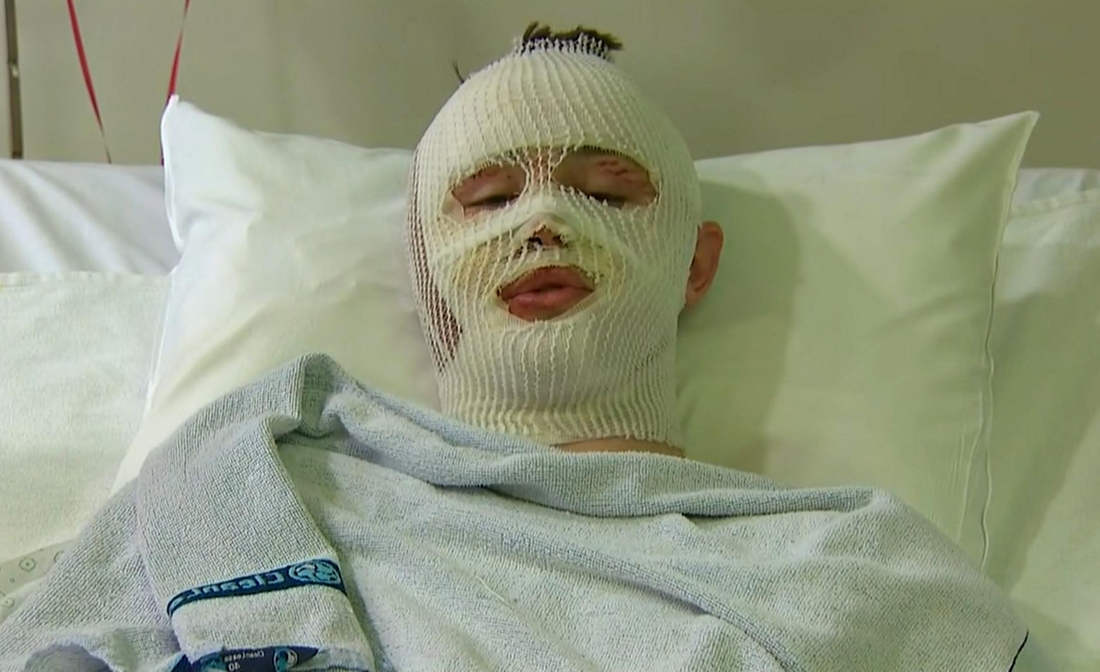 Mason is severely injured and must undergo many operations. There is even a moment when the anesthesia does not work, and he has to consciously experience how dead skin is scraped from his severely burned hand. But again and again, he relies on God's support and refocuses on the future. He must and will not be intimidated by the terrorists, because then the adversary would have won.
Recovery and forgiveness
Thanks to all the good care and especially his own dedication, Mason Wells is today a cadet in the US Marine Corps and is able to make his dream come true. He wants to serve in the military to make this world a better place, but at the same time, he realizes that this task starts with himself.
Throughout his entire recovery, he never wanted to be guided by resentment, resignation, or regret. He explicitly forgives the perpetrators who caused him so much pain and misery for everything they did. He does this mainly because he feels that for him, the atonement of Christ means that he should not allow himself to be consumed by evil. Forgiveness gives him the opportunity to banish bad feelings and trust in God's judgment, which he hopes will be just for the terrorists.
To share this entire experience, Mason has written a book with the help of others: Left Standing: The Miraculous Story of How Mason Wells’s Faith Survived the Boston, Paris, and Brussels Terror Attacks. Highly recommended reading.
About the book
This book is not about terror. It is not a book written to instill fear nor for mere entertainment. Nor can I give a voice to the hundreds and thousands of others on this planet who have fallen victim to the cruel acts of others. This book is rather a journal about my journey concerning faith, hope, and love: faith in God and in the general goodness of humanity; hope for better days; and a desire to banish fear and hatred.
This quote that Mason gives in the introduction actually says it all. It is not a sensational story about all the details, but rather an incredibly positive story about everything Mason has experienced and how he repeatedly chooses the positive through all difficulties.
While there is so much pain and despair in the world, Mason's story is inspiring because he shows that giving up is simply not an option and that by constantly encouraging yourself and overcoming difficulties, you can experience tremendous growth.
Mason himself says about this: “Our trials can overwhelm us and shake us to the core of our being. But they can also benefit us and teach us things that would otherwise be impossible to learn.”
This book is primarily a story of love and faith in other people: “I am convinced that we can all, in one way or another, be a saving blessing to someone else in their life,” according to Mason.
Why does God allow bad things to happen? Why does life seem so unfair? Where is that justice actually? Who are we to decide how justice should be done? What can I do during such violent events? I ask myself these questions again and again and the answers are not easy to find, except when I turn to God again and again.
My favorite quote in the book is halfway through: “Bad people are rare, good people are everywhere.” Mason wrote this because he himself experienced that the tragedy in Zaventem was the work of a few individuals, but that literally thousands of people were busy helping afterwards.
Mason gives some more good tips in this book: “I want this book to be an affirmation that love is not simply the opposite of hate, but that love is precisely what we need to improve our lives and the lives of those around us, as well as the world we live in. […] Life is 10% of what happens to you and 90% of how you react to it.”
Or as he himself says at the end of the book: “I hope that this book will ultimately allow you to move forward in life with a stronger grasp of faith, hope, and forgiveness.”
Mason Wells speaks
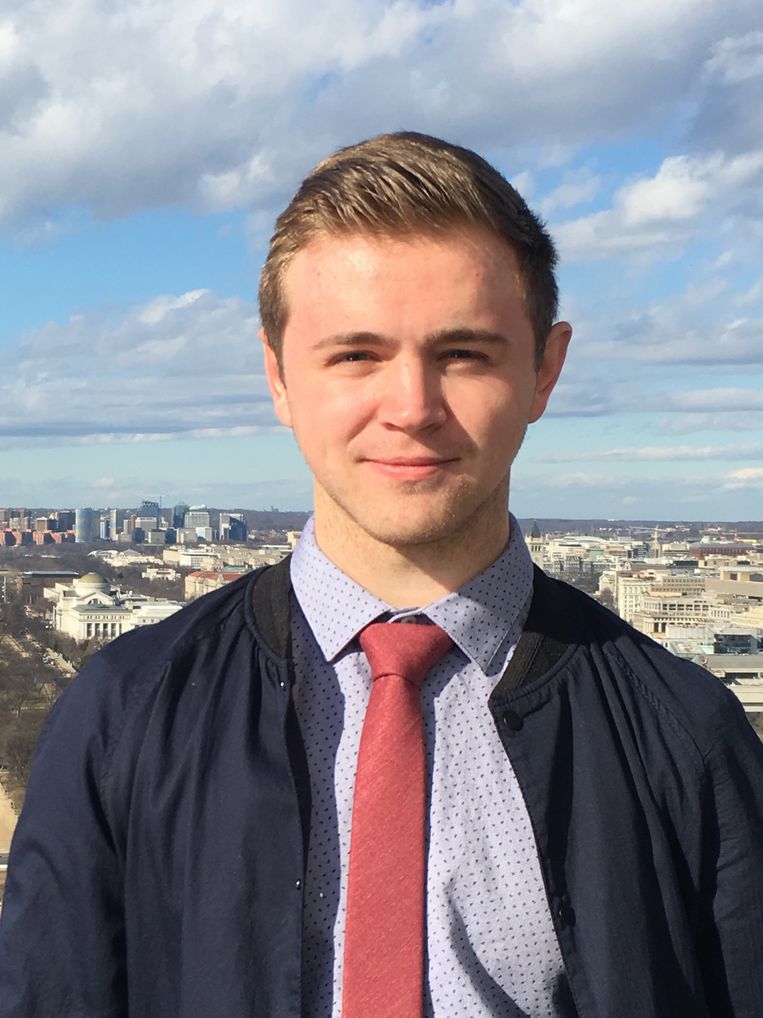 We were fortunate to be able to ask Mason Wells a few questions about these events and his book.
David Geens: You have experienced terror up close. This book reflects your vision on why your focus is on love, forgiveness, and faith. Why did you feel it necessary to share your personal experiences with the world?
Mason Wells: When I was first injured, I wanted nothing more than to forget everything and return to my normal life. As time went on, people around me began to show how sharing my story could help others overcome their problems. Tyler Beddoes, one of my co-authors, convinced me that writing down my story would achieve a lot in spreading a message of healing and hope.
DG: You survived terror and achieved your dream. All's well that ends well? Can you imagine that some people after reading your book might think it was “easy” for you to tell your message of forgiveness?
MW: It has never been easy. By choosing to reapply to the Naval Academy, I have walked a much more difficult path than if I had not applied. My life here, at the academy, is not easy, it is even very challenging. I was rejected the first time I applied to the academy, so I know from experience what it feels like to feel dreams slip through your hands. Not everything has a good ending.
Life often throws us curveballs and sometimes knocks us down. These moments can make us think that we no longer have control over our lives and that we are worth less than we should be. But that is certainly not the case. Where one door closes, another opens.
Our life is what we make of it, and the remarkable thing is that we ourselves are usually the ones holding us back from further growth. Every day is an opportunity to change our lives, to become someone or something new, and to leave our old self behind.
As soon as we start believing that, a mental change occurs that transforms our lives. Or as Travis Manion, a war hero, once said: “If not me, then who?”. Who tells us that we cannot live according to the goals we set for ourselves? Who tells us that we are not the ones who can change the world? The answer is no one but ourselves.
DG: Your story is so beautiful that it's almost too good to be true. You mention in your book that your recovery was hard, but you hardly talk about it. Were the negative moments so short that you easily forget them, or do you simply prefer not to talk about them?
MW: Of course there were hard times and moments, but I prefer to focus on the blessings I received in the aftermath of those terrible events: I became stronger, I gained more empathy for others, and I accepted the truth that I am the master of where I want to go in my life.
I am not afraid to think about what I've been through because I have accepted that I can't change anything about it. And because I have come to the conclusion that I will, one way or another, have tragic and profound memories of that day in Brussels.
The choice to face that and to know that it does not define me is what gives me hope.
DG: Do you think your story can bring a message or comfort to someone who has lost a loved one to terrorism?
MW: I think everyone who has experienced trauma or suffered great loss can relate to my story. I hope my message touches their hearts and that they feel they are not alone. But also that they understand that God has a plan for them if they turn to Him.
DG: Are there days when you react as other people would expect?
MW: I have no idea what reaction people would expect me to have. Do I experience frustrations? Yes, absolutely. Do I have setbacks? Of course. But I don't let those short-term problems dictate the rest of my life.
DG: Will you ever return to Brussels?
MW: There will certainly be a day when I will visit Brussels again. Then I will certainly walk through the doors at Brussels Airport again.
DG: Do you think you would have had the determination to reapply to the Navy without this experience?
MW: Maybe I would have made it into the Navy without this experience, maybe not. While I know God is deeply concerned about the choices we make in our lives, I am even more certain that He cares much more about our choice to follow Christ's example than the choice of what professional career we will have.
DG: To conclude: one last word of advice to the missionaries in the field?
MW: Advice for missionaries? Hmmm… Remember that your mission is what you make of it. Focus on the people, embrace the Gospel with everything you have, and worry less about yourself or how you come across compared to other missionaries. Remember that a positive attitude changes everything for the better, and choose to have a positive attitude on days when you are tempted not to.
DG: Thank you Mason, for your book, your testimony, and your advice to all of us.

Discover more from GeensZins
Subscribe to have the latest posts sent to your email.
