

 On August 2, 2017, Jos Verlooy recorded the following statement interview in De Morgen:
For me it is mainly the idea of a monotheistic religion that matters. Because a religion with one god is the blueprint for a possible dictatorship. If there is only one authority that sets the rules, you will soon end up with an emperor or a dictator.
If you look at this quote in isolation, you conclude that Jos Verlooy is either advocating a multi-god system or has simply found an argument to throw into the mix as to why belief is actually a bad thing.
For those wondering, it is the latter because the belief in one god is connected in the interview with the Islam terror. Believing in one god is yet another explanation why belief so easily leads to terror.
Allow me to say that I not only disagree with Jos Verlooy, but even believe that he was wrong about the faith he received as a child - because I do not want to tar the entire Catholic faith with the same brush - or that he has completely misunderstood it.
Believing is an easy solution
Verlooy's explanation is that faith is actually an easy solution:
You no longer have to take responsibility if your actions are covered by a god - being God. If you believe well, if you follow the commandments and you do what needs to be done, then you shouldn't think about it too much. The only responsibility you have left is to follow the rules of the faith. I think that's a bit too easy. You simply pass on your responsibility to an authority that is not accountable.
Sorry Jos, but you now too easily use that as an intellectual excuse to give up your faith, at least your faith in the God of the Christians. The system is not as simple as a set of rules that you have to follow and the rest doesn't matter. If you think that life is so simple that it can be encompassed by a set of rules, no matter how extensive, then I think you are making a big mistake as an intellectual.
The Christian God has taught us a set of guidelines. Guidelines that help us make the right choices. Because that's what it's all about: what choice do we make? That responsibility remains ours. The Bible even begins with that lesson: the story of Adam, Eve and the apple is about that fundamental truth. Do we choose curtain A or curtain B?
Actions and choices define our humanity
 Our entire life consists of actions. As humans, we are armed with the necessary tools to act instead of being a subject to be treated. A person who does not take his life into his own hands becomes one looser mentioned in our current society.
But no action takes place without a prior choice. Should I wear dark or pale socks today? Do I want a child with this partner or not? Even escaping from the choices by, for example, taking certain drugs, is a choice that precedes that action. It is not without reason that treatments are currently prescribed for what is called choice stress.
Every choice we make is based on our experience: our sum of choices and consequences that we have made. Every choice builds a little further on who we are or want to be. Some choices are fundamental, others are trivial.
Christian morality, according to any interpretation in any denomination, is a set of guidelines that help guide those choices. One guideline is stricter than the other; stricter in the sense of “less open to interpretation” and perhaps therefore more likely to you as “removing my own responsibility”. But is that true?
If you are walking on a beach and you see a sign stating that swimming is prohibited, you still have the choice to ignore the sign or not. Our current society is becoming one of libertarian choices that make it possible to accept every rule for itself or not. If you choose to ignore the sign, you may go swimming and notice that the sign is there for a reason. After all, there is an invisible undercurrent that, unless you are an Olympic-trained swimmer, slowly but surely carries you away from the safety of the coast towards certain death.
Yes, I admit that life is easier with the rules of my religion that you apparently despise. I agree with Reverend Baardmans – alias Jan Willem van der Straten – who uses the Bible to combat choice stress. But don't many people nowadays sigh that life would be more fun if there were more or less a manual available? By the way, isn't that the ordeal that the Catholic priest goes through in your monologue?
Faith should not be forced, but it should be used
You do ask a good question when you say that faith should not be imposed. I completely agree with that. Faith should be a free choice. In my opinion, even the freest and therefore most fundamental choice that defines who you want to be.
However, I think it is unacceptable that religious people are not allowed to make a choice based on that framework for what they consider important in our society. backward sense of superiority of the atheists. Your frame of reference – that without God – is the only thing you believe is morally high enough to make choices about laws. In this statement that atheist morality is the only superior morality, you yourself are guilty of what you accuse religious people of: wearing blinders through dogmatic thinking.
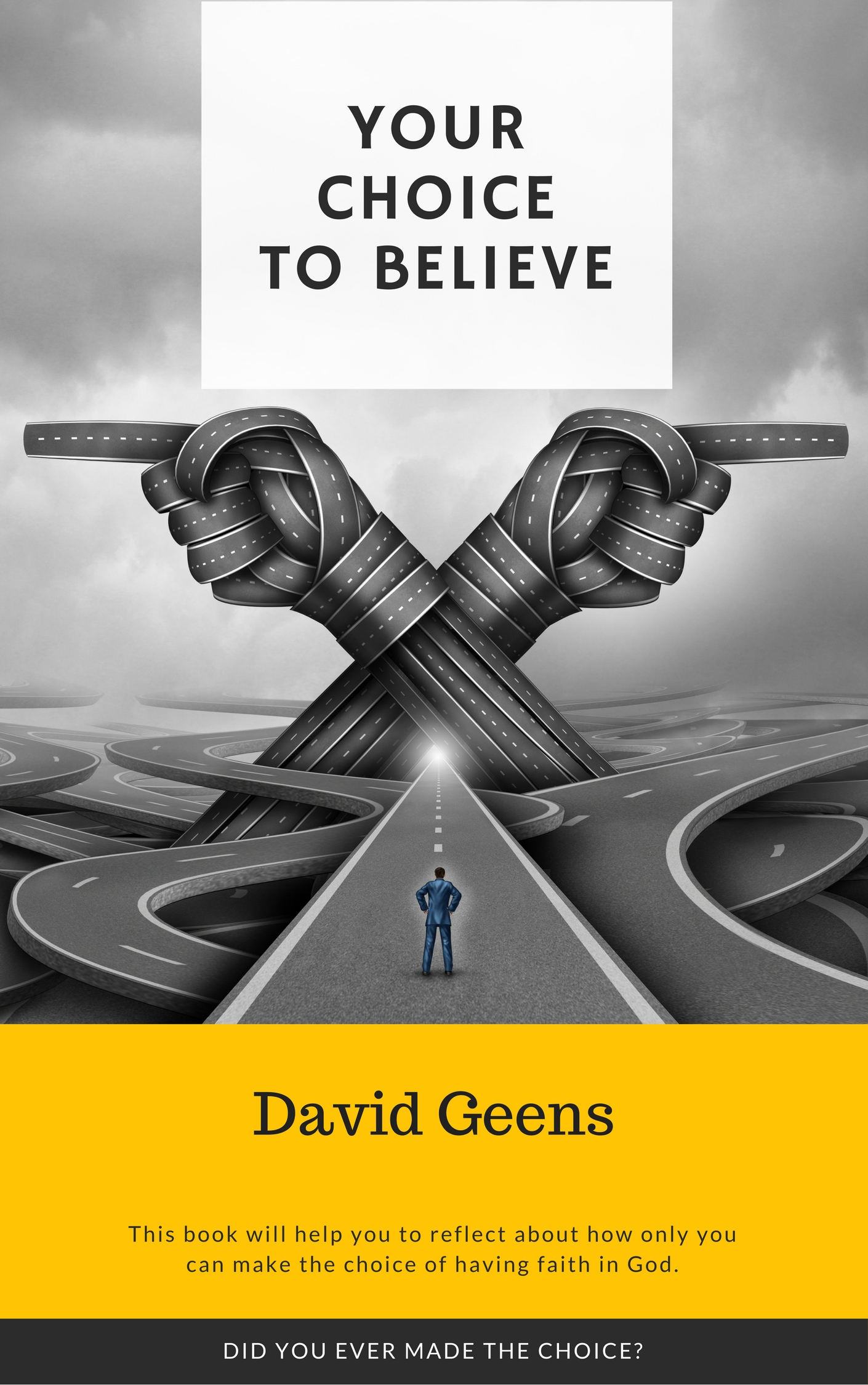 FYI: This topic is close to my heart. I am currently working hard on a book “Faith is a choice” that is exactly about this. Believing in God is a fundamental choice that we must make in complete freedom. If you would like to be kept informed about the publication of this book, please subscribe via the sidebar to stay informed about this website.
Discover more from GeensZins
Subscribe to get the latest posts sent to your email.
