

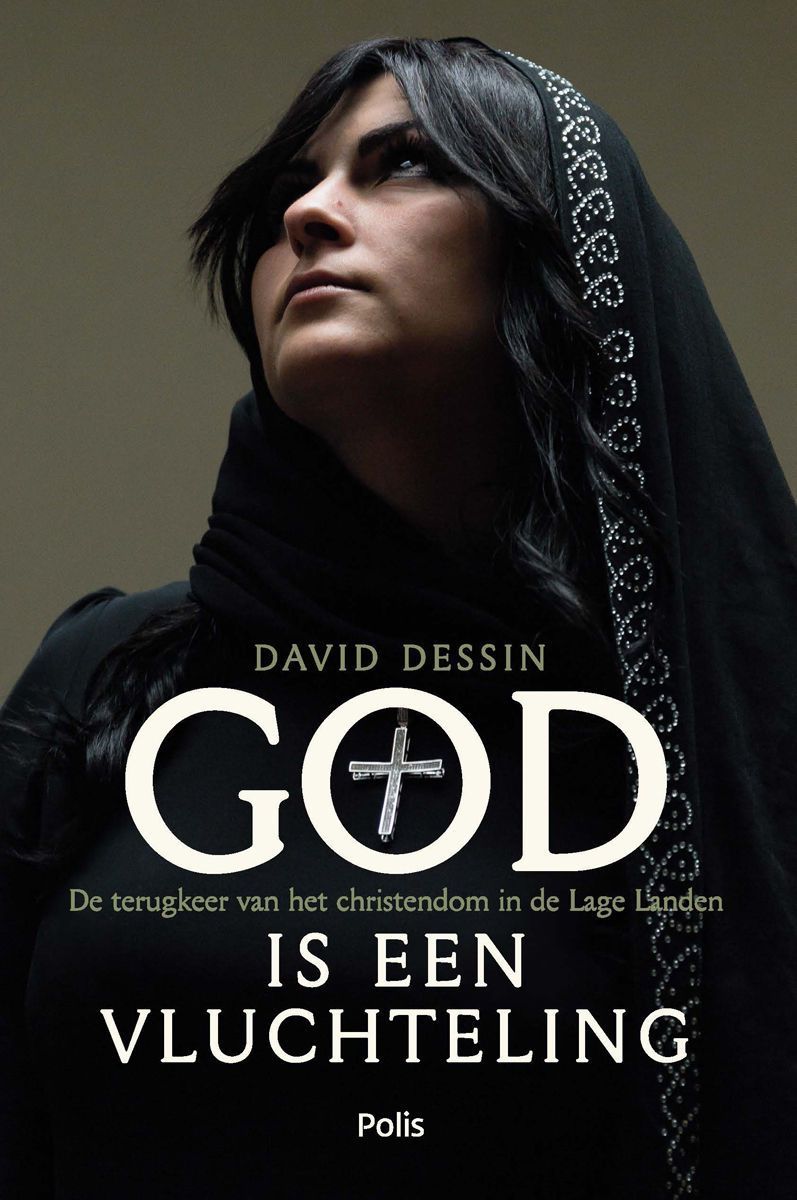
 David Dessin has with God is a refugee a must read written for everyone who calls themselves Christian and lives in Flanders (or by extension in Europe). With the starting point of mapping the Christian identity of refugees in Flanders, he has, however, made a more than commendable attempt to describe the diversity of Christianity, especially outside Europe.
Christianity is our European ex-religion
As Dessin rightly states several times in his book, Christianity is for us Europeans, especially our ex-religion. The emphasis here is on our: we still think that Christianity, while perhaps not originating in Europe, was made great in Europe and spread from there – and on ex: only a few percent in secular Europe still consider themselves actively Christian.
In 1980, a quarter of Flemings regularly attended Sunday mass. In 2010, this was barely 5 percent. The average age of regular churchgoers is seventy years; only 2 percent of that group is younger than thirty-four years.
This naturally explains a lot about the way we look at Christianity: it is something from our common past. We still like to refer to it. When drawing up the European Constitution there was an extremely long discussion about a reference to the Christian God, but ultimately even a reference in the preamble was something that could not be supported in post-modernist and especially post-Christian Europe[footnote]See God in the Constitution[/footnote].
Dessin clearly writes it in the following quote:
What remained of that Christianity was socio-critical activism, a form of humanism where Christianity was at most a stepping stone to a general ethical association for humanistic values.
Christianity in non-European diversity
This is actually the basis of the entire book. To present a picture of non-European Christianity using testimonies from refugees who now live in Flanders and actively practice and wish to share their Christian religion.
It gives a somewhat incomplete picture of the diversity of Christianity, which in itself within Europe is already so much more than just its Catholic version. Dessin has performed a thorough research task and presented in a readable format how Christianity has led a non-European existence since its inception.
We read how separate Christian denominations emerged in Africa and Asia, how they were suppressed by European missionaries, and how they were sometimes equally (re)invigorated by missionaries. We learn about why southern Christians from rural communities interpret the Bible so differently from us from secular metropolitan communities.
Europe as a mission field
With the ever-growing phenomenon of global refugee flows from the South towards Europe, these Christian experiences are being imported into our regions. Europe is slowly becoming a mission field itself where Christianity returns, but in a different form.
Christianity is no longer primarily a European story today. It is a change that has barely penetrated modern Europeans, but one that has major consequences for the way Europe sees its place in the world.
Or as David Dessin sharply puts it in his conclusion:
European Christianity may be on its decline, but Christianity in Europe is alive and well. It's just no longer European.
Christians are persecuted worldwide, even in the West
What I find so strong about this book is that it pricks our conscience. Or at least it should. Because from a secular society, it has recently been strongly moving towards a laicized state in which religion is only allowed within a closed private domain. This means that we also lose all connection with a history that we share. We talk about humanistic values, but forget that we can just as well call them Christian values and that they would not exist now in their capacity as ideals to be pursued if they were not given to usspoon-fed for 2000 years.
In God is a refugee we read:
Every month, at least two hundred churches or places of worship are attacked. Every day, in every region of our planet, we observe new cases of systematic violence and persecution against Christians. No other religious community endures as much hatred, violence, and aggression as the Christian community.
OK, this is a phenomenon that mainly takes place outside Europe. Either in areas where fundamentalist Muslims want a pure Islamic state or where authoritarian dictators want no other gods beside themselves.
But it is striking how we close our eyes to this. When Theo Francken rescued Christians from Aleppo (Syria) in 2015 he had to rush to say that they were rescued because of their precarious situation and not because they were Christians. That their situation was precarious because they were Christians, was not allowed to be portrayed. Of course, this criticism mainly came from the left, where an aversion has developed for everything Christian, but they extend the cloak of charity to other religions.
Completely mind blowing was that this criticism partly came from Catholic circles. Or how much people no longer want to recognize religion as part of an identity, while I personally think that here in the West, little is more typical for an identity than the free choice of a religion.
It is not for nothing that you read in the book that it is sobering to to hear Christians say that they experience the same forms of persecution in a Western country as in their country of origin. People flee because of their faith to a Europe that claims to have experienced the Enlightenment, but then notice that here they are just as socially excluded simply because they are religious and openly express it. I can speak from experience.
Mormons are also refugees
I got to know David Dessin when he had not been working on this book for long. His approach was to present a picture of a resurgent Christianity in Europe:
European Christianity may be on its decline, but Christianity in Europe is alive and well. It's just no longer European.
From that perspective, he was also interested in Mormons, as we are worldwide the fastest-growing Christian denomination (although that growth is also slowing down for us). I myself spoke extensively about my conversion and my choice to still want to be a Christian in a society that looks at you with pity for it.
Unfortunately, that didn't make it into the book. Publishers need to sell books, and everything about refugees sells well these days. I think that's why David wrote in his introduction:
Evocative stories such as that of the Mormons and their presence in the Low Countries, on the other hand, do not fall under the problematic of refugees, which is central to this work.
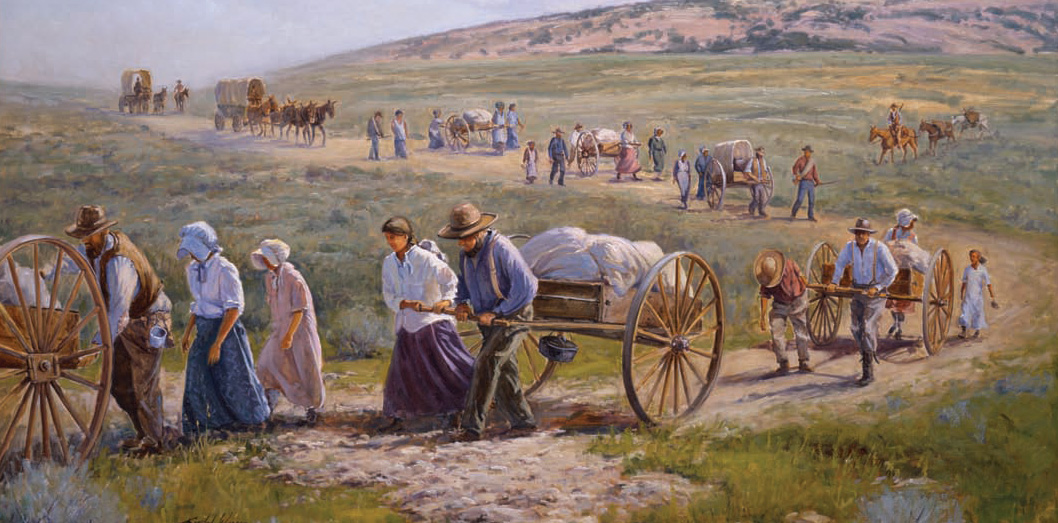 Mormons are, however, very familiar with the concept refugee. In modern America, they are the only ones outside the Native Americans who were driven to flee and threatened with extermination. Being expelled, murdered, raped, plundered… The history of The Church of Jesus Christ of Latter-day Saints contains plenty about it. Or if you prefer to read this in novel form, I recommend you make room in your bookshelf for the nine-volume masterpiece: The Work and the Glory by Gerald Lund.
Perhaps David leaves an opening there for a next book or he can perhaps help me to write a book myself about how you as a European can be religious in our society today, how you don't have to be a weirdo who fights against science but embraces it and finds it as valuable as his faith and how you provide answers to questions everyone asks themselves. Who knows…
Discover more from GeensZins
Subscribe to have the latest posts sent to your email.
