

I regularly monitor Twitter to see what is written about Mormons. This week I was shocked by the following tweet about tithes:
https://twitter.com/rangbyung/status/849337083680481280
Wow, as it stands there, it sounds terrible. “Give your money to the church, that is more important than taking care of your family”. It's really worth considering, because that's really not how tithing works.
Apparently has Someone Somewhere this blog read and there are some strong statements:
He went hungry often times because his parents had to pay the church.
This entire Alternet blog is about how a leader of The Church of Jesus Christ of Latter-day Saints allegedly said that paying money to the church is more important than buying food for your children.
This article, however, is based on another article that you can find on this website. More information is added there, namely that this man testifies to the fact that if you pay tithing, God always ensures that you ultimately have enough.
The reproach from Patheos, however, is still that paying tithing is more important than buying food. The author also blames the church for not taking better care of each other as a Christian group.
They even include a YouTube video with a title to that effect and in that video you hear some statements to that effect.
And now the truth about tithes and the address
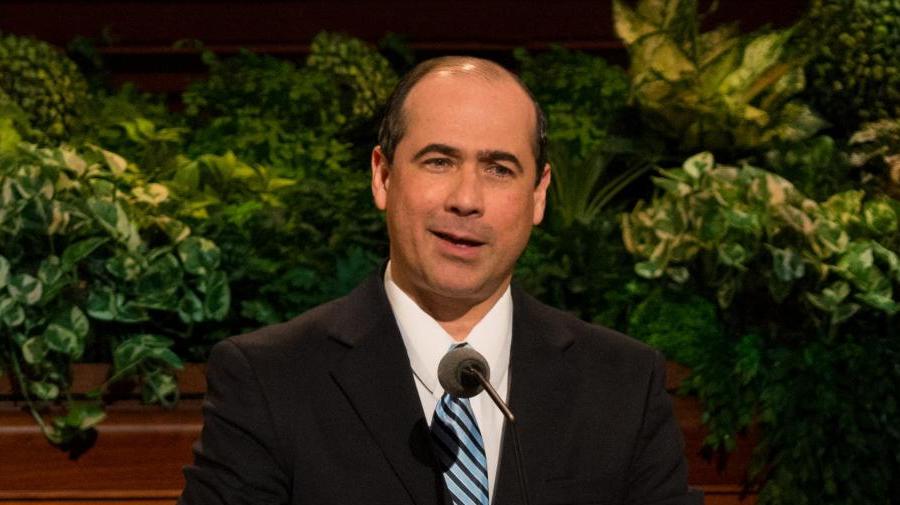 Now you should know that they are actually referring to a speech by Elder Valeri V. Cordón, a Seventy of The Church of Jesus Christ of Latter-day Saints. So it's actually worth reading what Elder Cordon really said:
Powerful teaching is extremely important to preserve the gospel in our families, and it requires diligence and effort.
The speech is about how important it is as parents to teach the gospel to your children by setting a good example. One of the examples is indeed about tithing and goes as follows:
When I was young, I worked in my father’s factory during vacations. The first question my father always asked after I received my salary was “What are you going to do with your money?”
I knew the answer and responded, “Pay my tithing and save for my mission.”
After working with him for about eight years and constantly answering his same question, my father figured he had taught me about paying my tithing. What he didn’t realize was that I had learned this important principle in just one weekend. Let me tell you how I learned that principle.
After some events related to a civil war in Central America, my father’s business went bankrupt. He went from about 200 full-time employees to fewer than five sewing operators who worked as needed in the garage of our home. One day during those difficult times, I heard my parents discussing whether they should pay tithing or buy food for the children.
On Sunday, I followed my father to see what he was going to do. After our Church meetings, I saw him take an envelope and put his tithing in it. That was only part of the lesson. The question that remained for me was what we were going to eat.
Early Monday morning, some people knocked on our door. When I opened it, they asked for my father. I called for him, and when he arrived, the visitors told him about an urgent sewing order they needed as quickly as possible. They told him that the order was so urgent that they would pay for it in advance. That day I learned the principles of paying tithing and the blessings that follow.
It is simply an example of a father who is faithful in the commandment to pay tithing. Those who want to know more about tithing can read this at Why do Mormons pay tithing?. It is not about tithing being more important than buying food for your children. It is not about a greedy church that prefers money over you taking care of your children.
Mormons take good care of each other
To answer Patheos, by the way: the promise is that whoever pays tithing will never perish from hunger or thirst or suffer from the cold. This promise from Heavenly Father is made real, among other things, by the church itself. Whoever pays their tithing can always count on being helped from the fast offering fund.
Probably there are critics who say 'yes, that's how I can fulfill such promises from God: I do it myself', but aren't we as Christians the hands of the Lord anyway? Shouldn't we work in the vineyard and live according to the example of Christ?
In short, Patheos' accusation is baseless and completely wrong. If there hadn't suddenly been work for this family on Monday morning, they certainly could have knocked on their bishop's door for food. I myself have experienced in one of my callings how someone with a needy family goes to the store with the church's debit card to buy food and other necessities.
We even do more: we try to get the needy back on their feet as quickly as possible. No one benefits from being kept on a charity IV drip. Let everyone maintain their dignity and help them to be self-reliant. I recommend you read an older blog post of mine about it: “Welfare work is learning to stand on your own feet”.
How much money does the church receive?
Honestly, I have no idea. The church doesn't talk about it. In these times of transparency, such a thing arouses suspicion, but you also have to understand that if the church were to disclose all its finances, it would very easily become a target for financial opportunists.
Alternet claims that The Church of Jesus Christ of Latter-day Saints annually receives 7 billion dollars in tithing. Personally, I think that is greatly exaggerated. In a calling, I had insight into the actual money flows and I swore to always remain discreet about them. But I know that not all Mormons faithfully follow this commandment. Worldwide there are 15 million Mormons, but if I draw a parallel with things I know, there are a maximum of 4 to 5 million who pay their tithing.
That is about 1 million families, knowing that Mormons often have large families, that is already a serious rounding up. Globally, the income is certainly not 3000 euros per family, much less even, but let's still assume that. That's 300 euros in tithes per family, which is 300 million euros per month or 3.6 billion per year.
And those are all roundings up, because that 300 euros per family is certainly not correct. We don't even reach that average figure in Western regions.
Nevertheless, all in all, it's a lot of money, but it doesn't disappear into dark pockets. A complete bottom-up control system has been set up. No euro is spent without being checked at least five times, and every checker is in turn verified by a higher checker, all the way to the top. This auditing committee reports annually whether it has discovered irregularities or not. As a member, I am confident that tithes are not handled recklessly.
Conclusion: paying tithes is important, but no one is left out in the cold.
In short, I understand the tweet from Someone Somewhere. If you only get limited, somewhat distorted information in the second or third instance, then your conclusions can go awry. I don't blame anyone, but I hope that whoever is genuinely interested has read this story all the way through.
Discover more from GeensZins
Subscribe to have the latest posts sent to your email.
